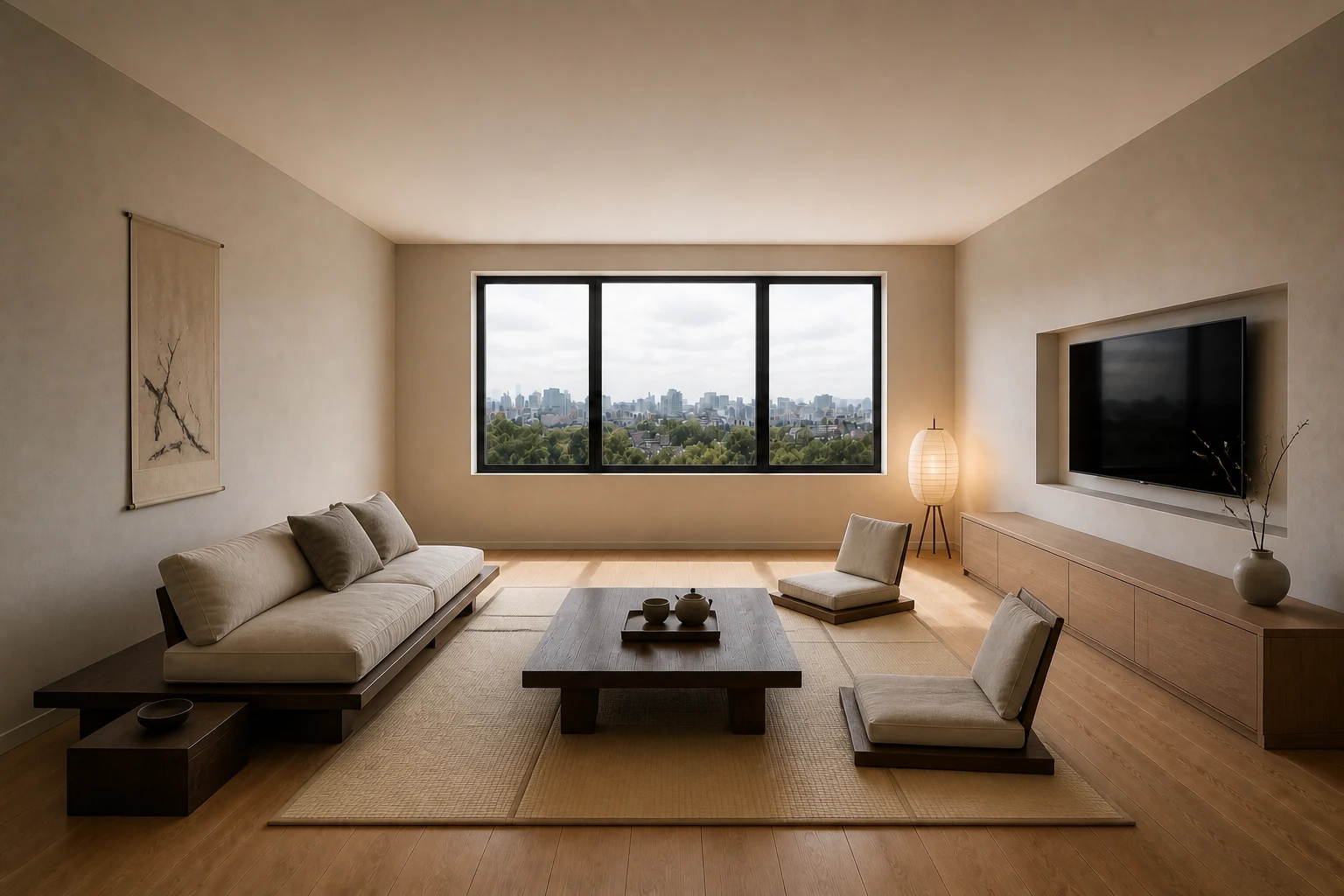
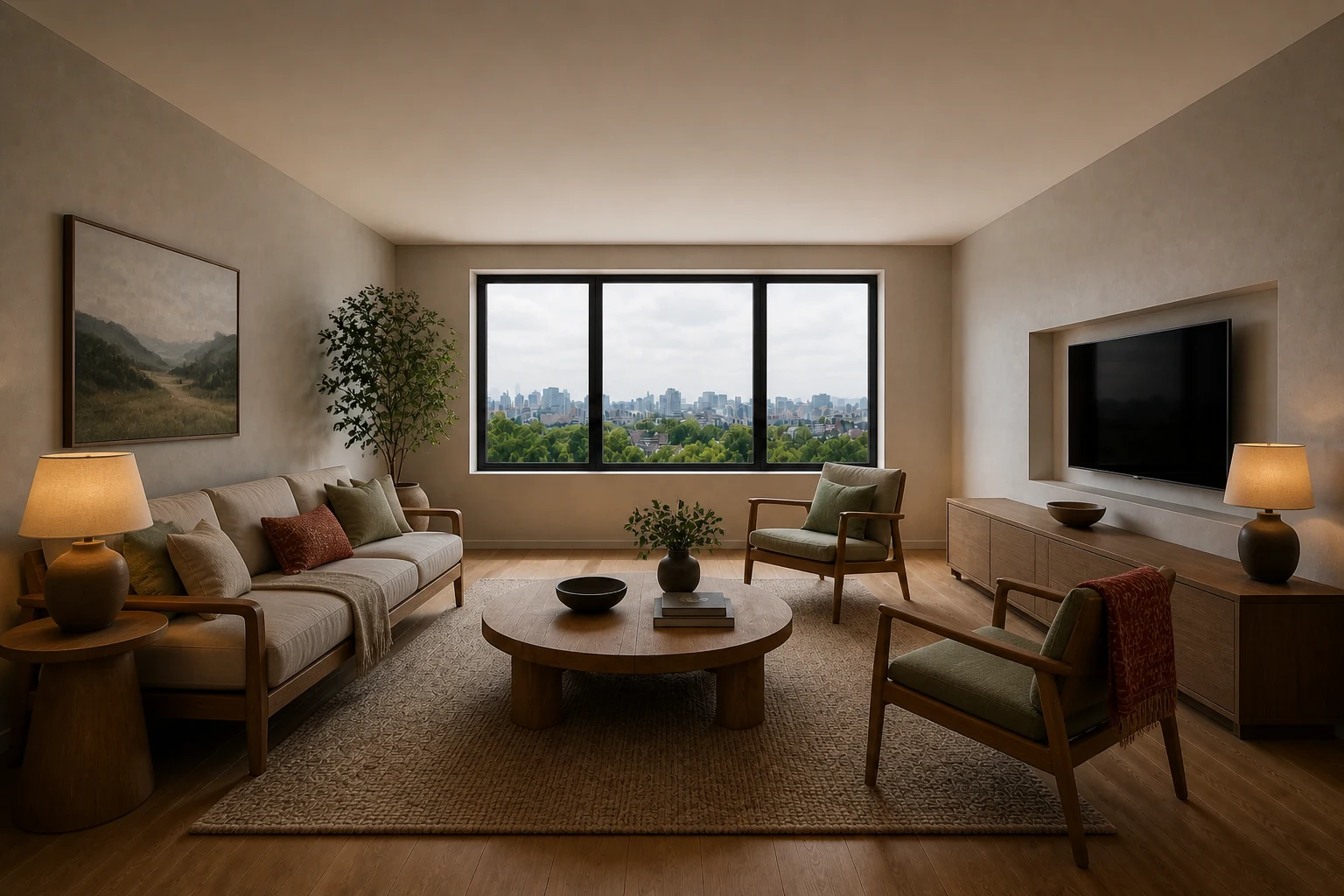
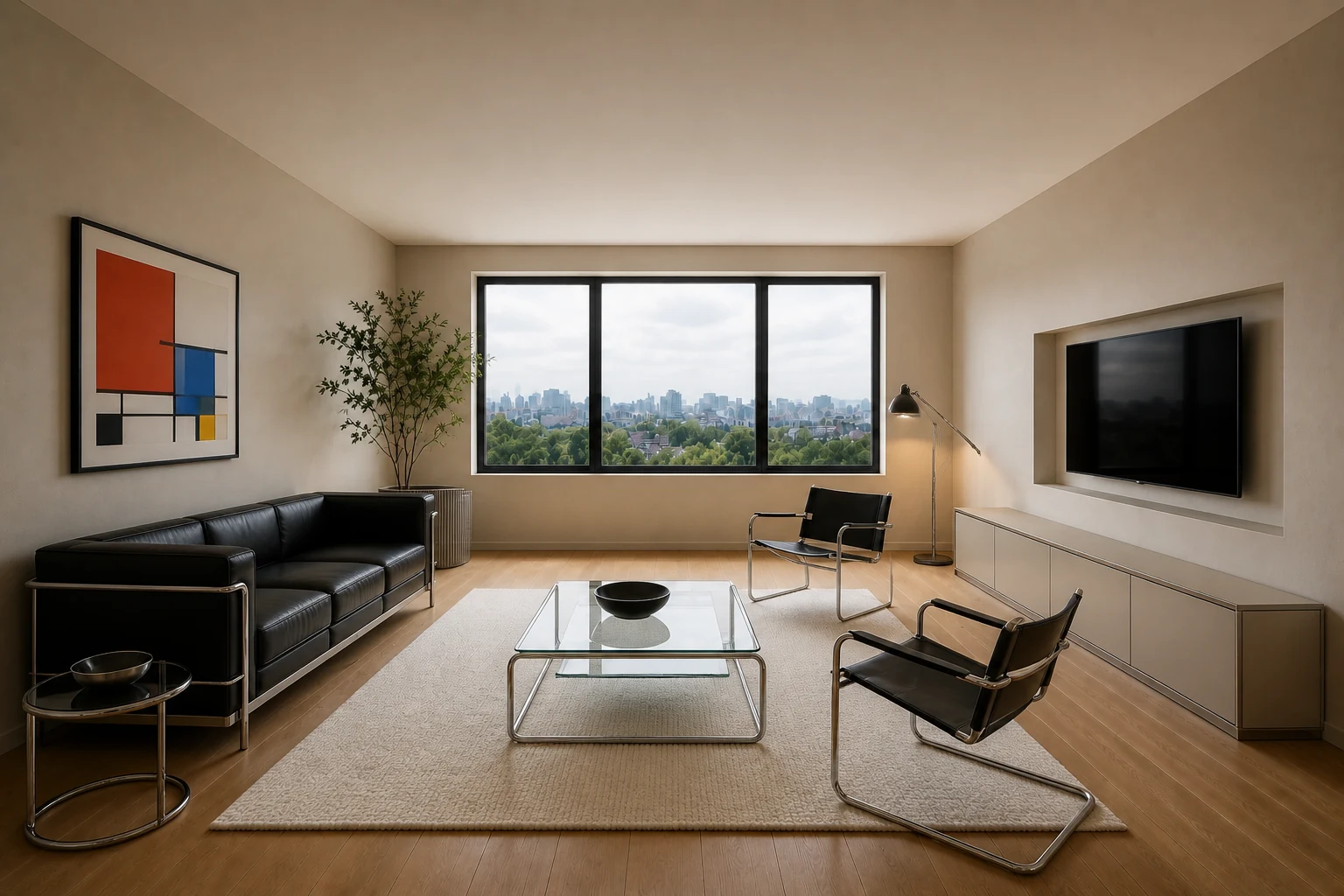
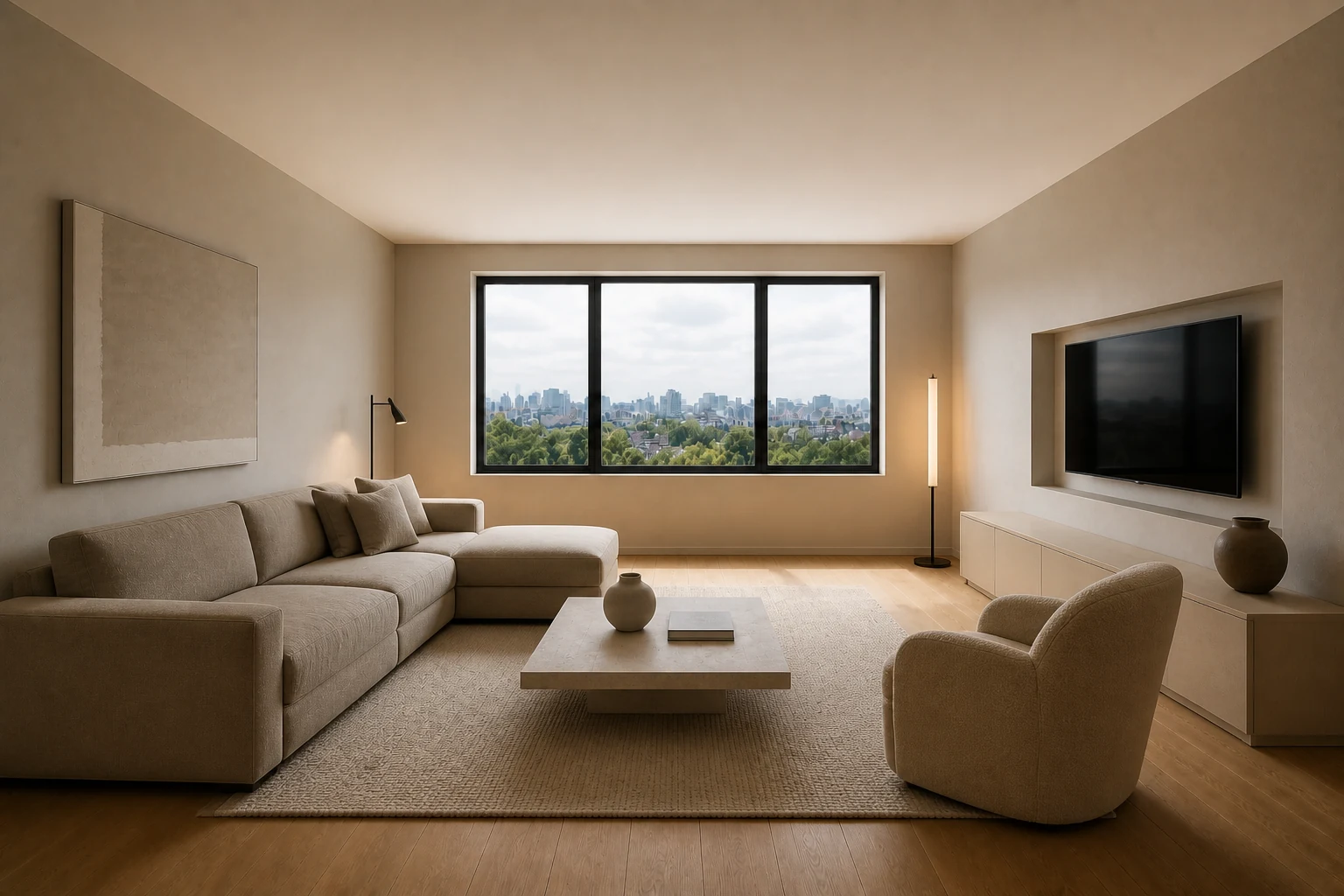
Allow real material change to remain visible.
Choose repairable solid timber and washable natural covers.
Success test: Wear can be maintained or repaired rather than hidden.
A restrained appreciation of imperfection, time, repair and material change.
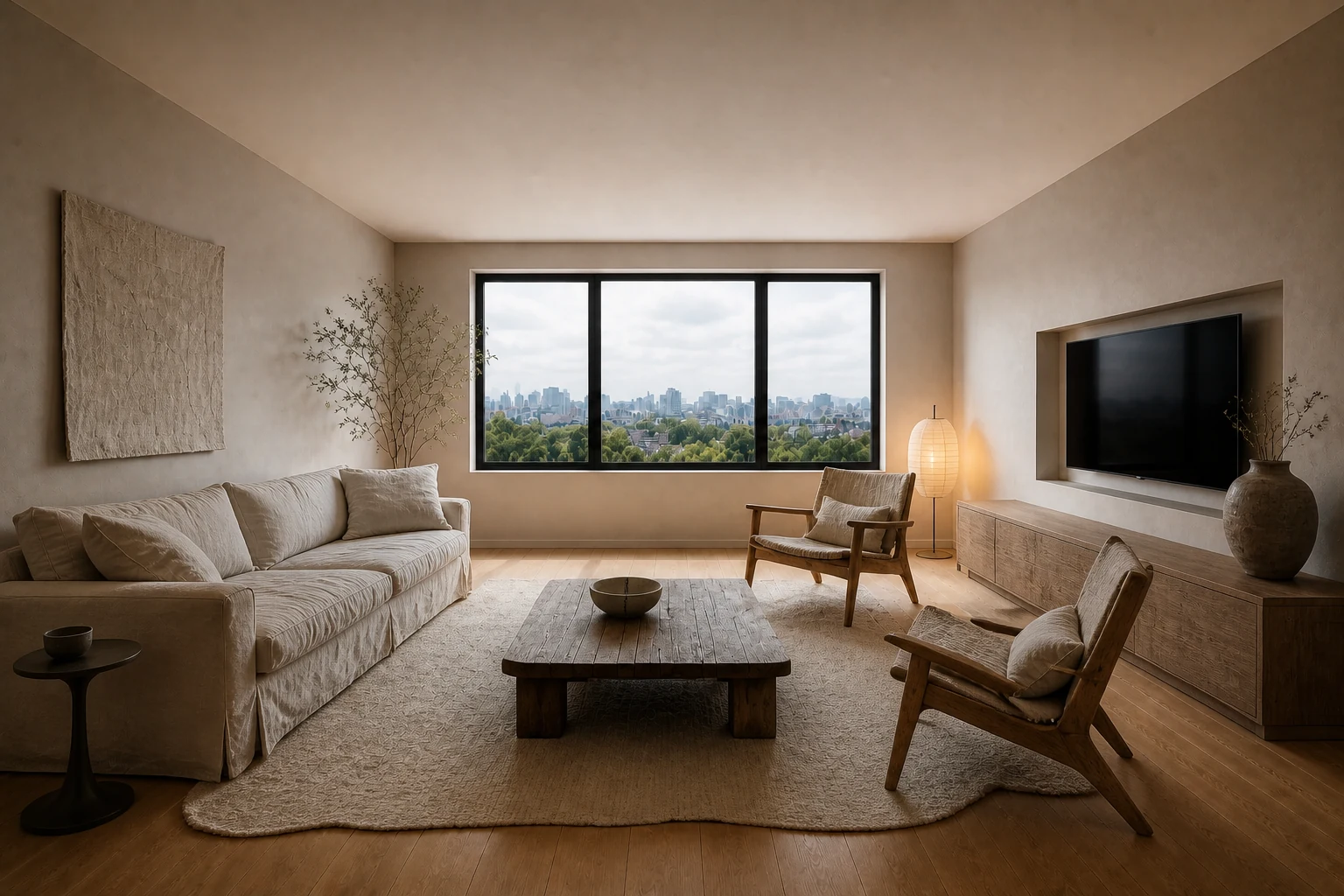
Aged timber, linen and sparse handmade objects make wear part of the room's value.
Clients comfortable with patina, irregularity and a quiet object count.
Distressed finishes manufactured as a trend can contradict the underlying ethic.
Choose repairable solid timber and washable natural covers.
Success test: Wear can be maintained or repaired rather than hidden.
Place handmade ceramics and one branch in the niche.
Success test: The display feels intentional without becoming themed décor.
Keep the centre usable and storage accessible.
Success test: Calm does not depend on removing necessary possessions.
Value is found in imperfection, impermanence, repair and the quiet evidence of time.
The room gives a small number of changing, repaired or handmade elements enough space to be noticed.
Restraint lets patina and asymmetry remain meaningful instead of becoming a themed collection.
Materials are selected for graceful ageing, repairability and tactile truth rather than simulated distress.
Soft, grazing or filtered light reveals texture and change without theatricalising decay.
The space supports unforced rituals and attachment to maintained objects rather than status display.
These are bounded design translations, not dimension-free prescriptions. Verify geometry, access, routine, maintenance and sensory comfort in the real project.
Support everyday occupation and social choice while keeping the primary spatial hierarchy legible.
Allow repaired, patinated and handmade elements to carry time without manufacturing fake damage.
Use few repairable, handmade or gracefully ageing elements with enough room to be perceived. Test the main seating relationship, withdrawal option, approach paths and the position of movable secondary pieces.
Prefer authentic patina, visible repair and maintainable natural change.
Use soft or grazing light to reveal texture without theatricalising decay. Combine ambient, task and focal light; check daytime glare and evening social use.
Avoid manufactured distress and unsafe romanticisation of damage. Do not let the visual concept block circulation, view, storage access or alternate occupancy.
Users can gather, withdraw and cross the room without moving the primary furniture.
Make preparation, cooking, cleaning, storage and shared use read as a safe sequence.
Choose surfaces that age legibly and can be maintained; hygiene and water resistance remain requirements.
Use few repairable, handmade or gracefully ageing elements with enough room to be perceived. Verify work surfaces, appliance openings, reach zones, landing areas and any seated use against the actual users.
Prefer authentic patina, visible repair and maintainable natural change.
Use soft or grazing light to reveal texture without theatricalising decay. Give work surfaces controlled task light and preserve comfortable ambient light for shared use.
Avoid manufactured distress and unsafe romanticisation of damage. Do not let a stylistic move interrupt workflow, ventilation, cleaning or equipment access.
A complete daily meal sequence can happen without crossing conflicts or relocating routine inventory.
Protect sleep, recovery, dressing and personal storage from unnecessary visual or circulation pressure.
Use quiet texture, irregular craft and a restrained object field without romanticising discomfort.
Use few repairable, handmade or gracefully ageing elements with enough room to be perceived. Verify bed approach, transfer, wardrobe opening, bedside reach and any retreat or dressing moment.
Prefer authentic patina, visible repair and maintainable natural change.
Use soft or grazing light to reveal texture without theatricalising decay. Separate low evening light, reading light and morning/daylight control.
Avoid manufactured distress and unsafe romanticisation of damage. Do not trade sleep comfort, privacy or accessible storage for a composed image.
The room supports arrival, sleep, waking and dressing with no repeated obstruction or visual spill.
Let one small shell change state without losing storage, circulation or a sense of closure.
Let working traces remain where they support the ritual, with a defined reset boundary.
Use few repairable, handmade or gracefully ageing elements with enough room to be perceived. Define named day, work, social and sleep states; assign a home and movement path to every transforming element.
Prefer authentic patina, visible repair and maintainable natural change.
Use soft or grazing light to reveal texture without theatricalising decay. Use switchable layers to distinguish states without permanent partitions where possible.
Avoid manufactured distress and unsafe romanticisation of damage. Do not call a room flexible unless each transformation is quick, stored and physically testable.
Each defined state can be set, used and restored without creating leftover clutter or blocked access.
Support sustained work, equipment access and a clear transition into and out of focus.
Use tactile honest materials and a few repairable objects while retaining ergonomic adjustment.
Use few repairable, handmade or gracefully ageing elements with enough room to be perceived. Verify posture variation, screen position, cable route, task reach, storage and acoustic exposure.
Prefer authentic patina, visible repair and maintainable natural change.
Use soft or grazing light to reveal texture without theatricalising decay. Balance daylight, screen glare control and adjustable task lighting.
Avoid manufactured distress and unsafe romanticisation of damage. Do not let the desk become a symbolic focal object while the actual work setup remains unresolved.
A complete work session is possible without improvised cabling, repeated reaching or circulation interruption.
Extend useful occupation outdoors while respecting climate, exposure, maintenance and threshold conditions.
Select materials whose weathering is safe, expected and maintainable in the local climate.
Use few repairable, handmade or gracefully ageing elements with enough room to be perceived. Verify door swing, drainage, wind, shade, planting access, furniture storage and safe clear circulation.
Prefer authentic patina, visible repair and maintainable natural change.
Use soft or grazing light to reveal texture without theatricalising decay. Use shielded, low-glare light appropriate to outdoor use and neighbouring conditions.
Avoid manufactured distress and unsafe romanticisation of damage. Do not transfer indoor materials or styling outdoors without durability and maintenance evidence.
The area remains comfortable, drainable, maintainable and safely accessible in its intended seasons.
Distressed finishes manufactured as a trend can contradict the underlying ethic.
Japanese Minimalism: wabi-sabi centres time, imperfection and repair more explicitly.
Rustic styling: manufactured damage is not evidence of age or care.
Repair and material ageing remain visible rather than being treated as failure.
Japanese craft and tea lineages · Historical lineageHistorical context for wabi, tea practice, material irregularity and attributed value.
Boundary: Does not define a complete contemporary residential style or the concept of ma.Curatorial context for understated, impermanent and incomplete qualities in tea culture.
Boundary: Cultural history; not a wellbeing or performance claim.The Atlas explains a design logic. PersonaLayouts combines behaviour, friction and measured room conditions into a project-specific protocol.