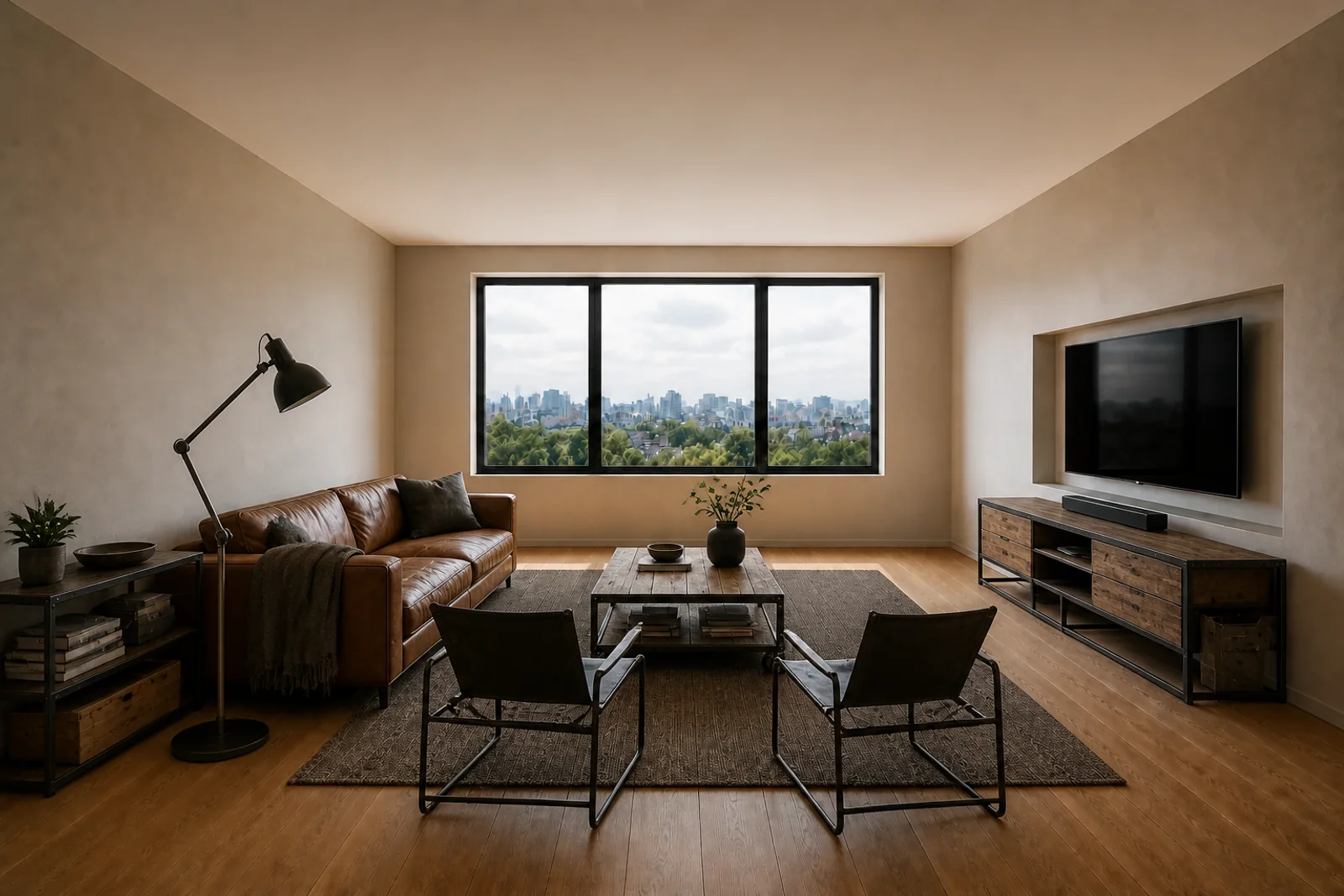
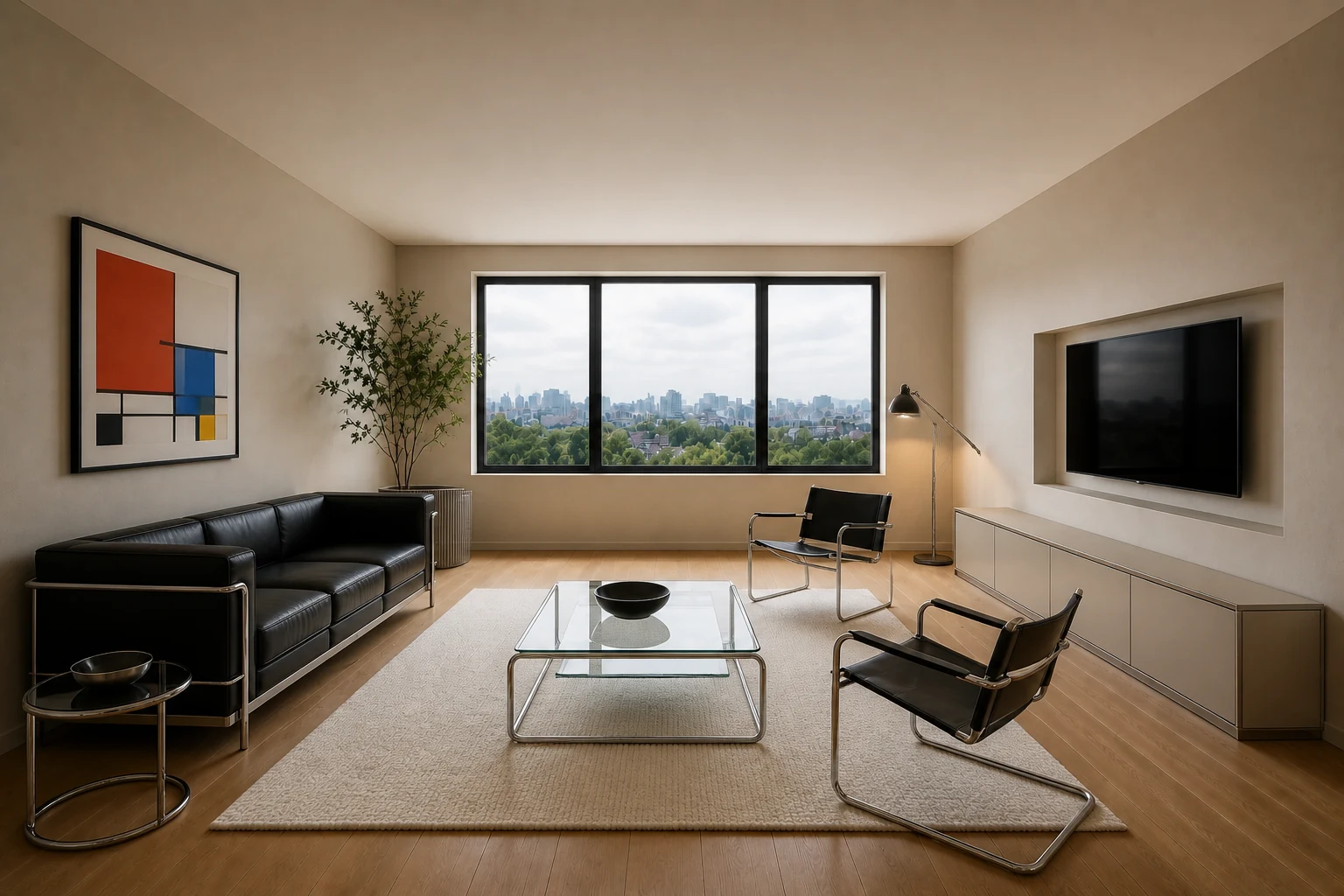
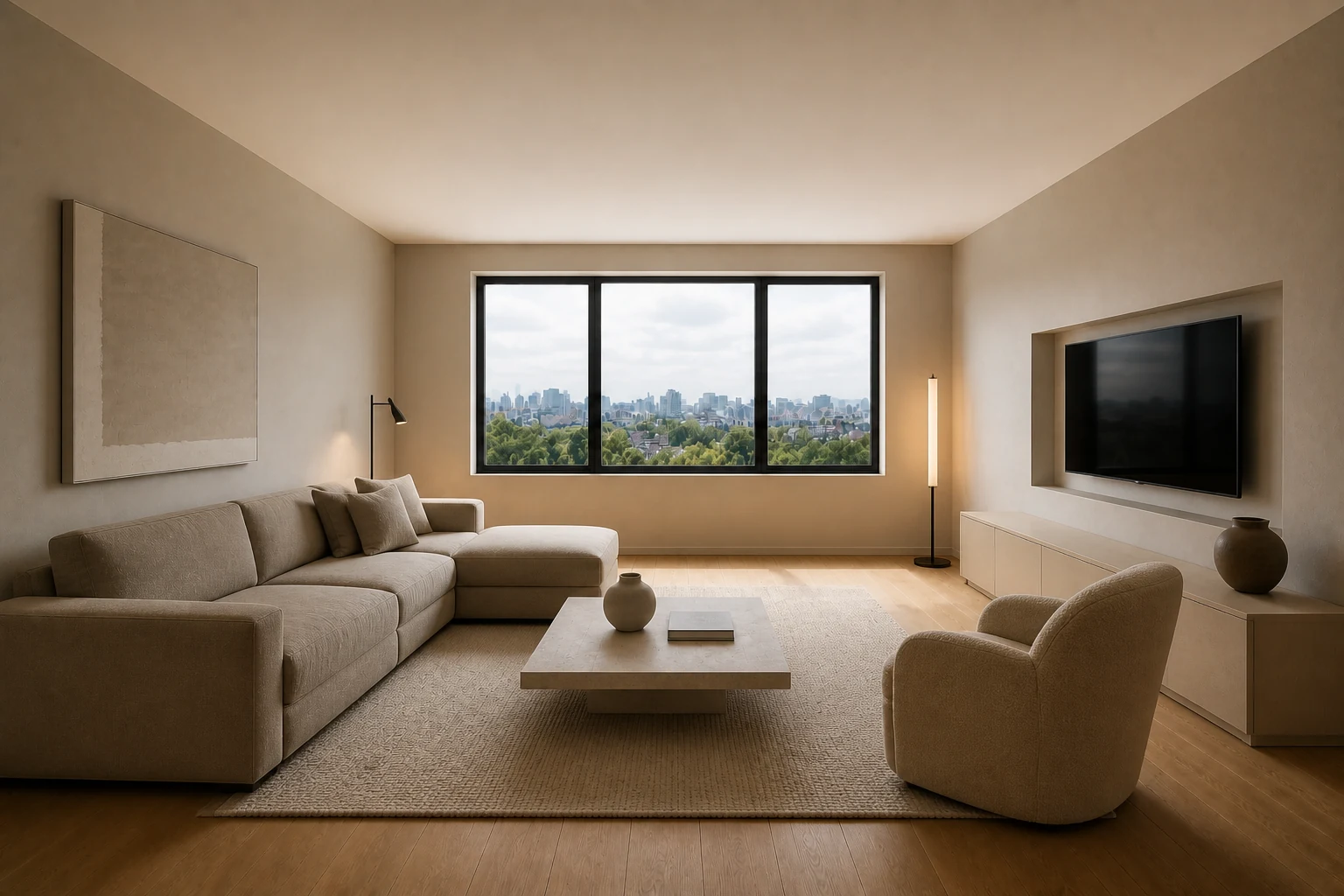
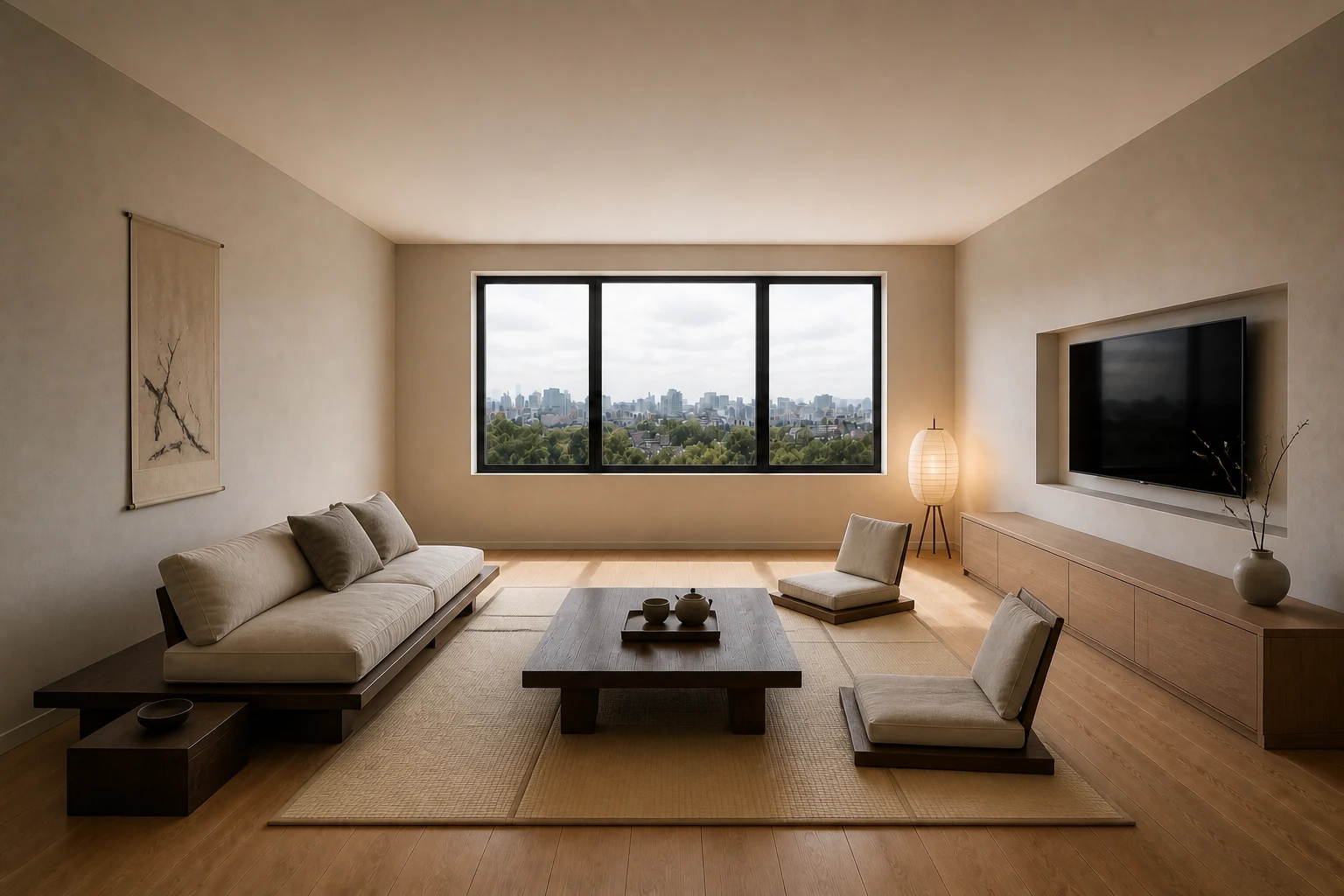
Define what controls the geometry.
Vary table ribs by one buildable spacing rule.
Success test: The form can be regenerated from documented inputs.
Curves and repetition emerge from explicit rules, fabrication limits and controlled variation.
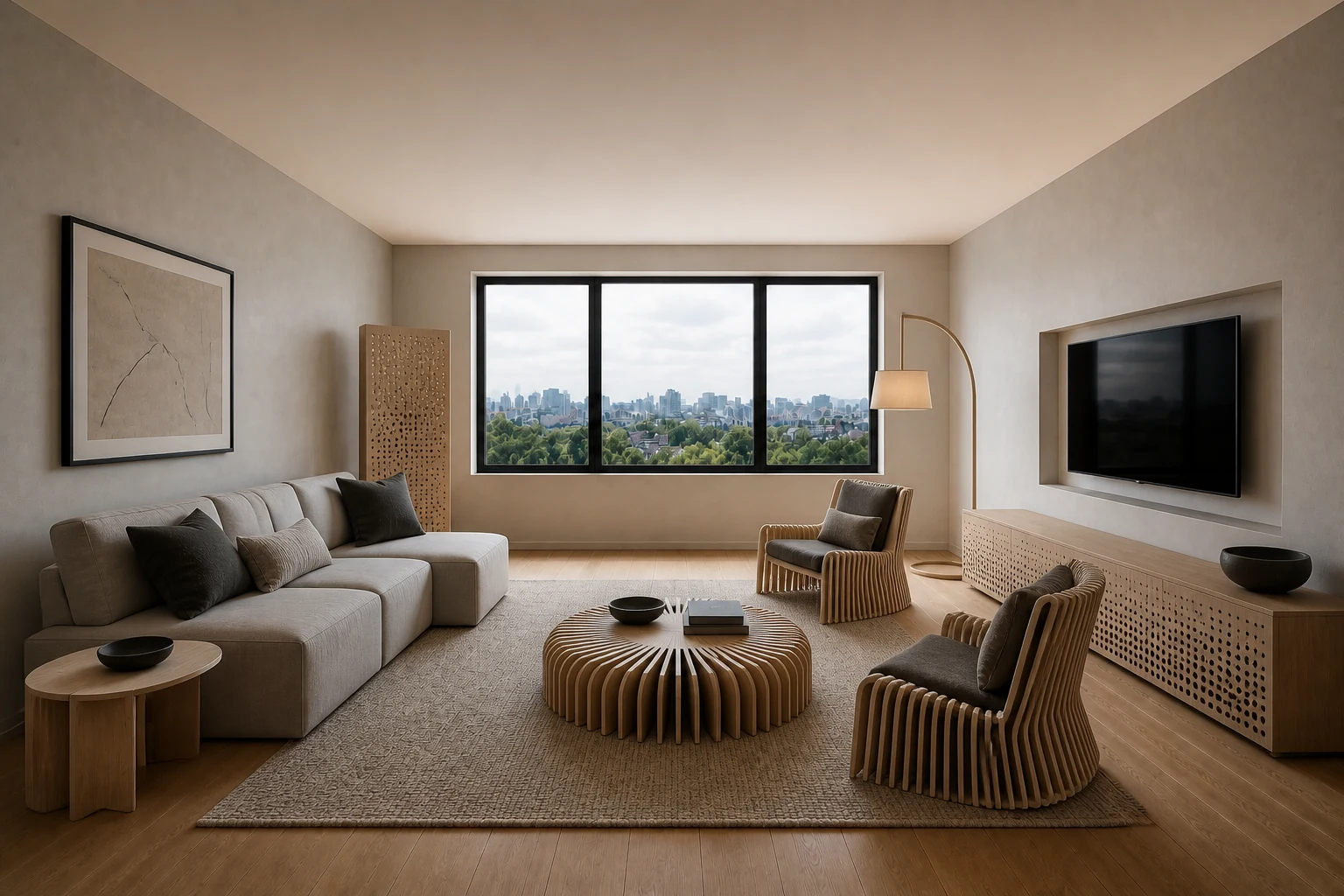
A flowing seating landscape, ribbed table and porous screen introduce algorithmic rhythm without changing the shell.
Custom fabrication briefs needing high identity and precise repeatable geometry.
A complex form without a useful parameter or fabrication plan is only styling.
Vary table ribs by one buildable spacing rule.
Success test: The form can be regenerated from documented inputs.
Use a freestanding patterned screen near the niche.
Success test: Light and view remain available through the divider.
Set minimum radii, sheet sizes and repeatable joints before form refinement.
Success test: A fabricator can price the component without redesigning it.
Form varies through explicit relationships, parameters and fabrication constraints rather than freehand complexity alone.
A rule system coordinates changing dimensions, performance inputs or repeated parts across the room.
Voids and apertures are outputs of the same rule set and can tune view, light, airflow or acoustic porosity.
Sheet size, tool radius, assembly, tolerances and waste are inputs to the geometry from the beginning.
Pattern density and surface curvature may filter or distribute light, but glare and performance remain testable requirements.
Custom variation can respond to different uses only when the parameters represent actual user or site evidence.
These are bounded design translations, not dimension-free prescriptions. Verify geometry, access, routine, maintenance and sensory comfort in the real project.
Support everyday occupation and social choice while keeping the primary spatial hierarchy legible.
Use variable relationships only where they improve fit, performance or fabrication logic.
Give every variable a use, performance or fabrication reason and define its range. Test the main seating relationship, withdrawal option, approach paths and the position of movable secondary pieces.
Include tool radius, sheet size, tolerance, assembly and waste in the rule set.
Use density or curvature to control light only after performance testing. Combine ambient, task and focal light; check daytime glare and evening social use.
Avoid complexity without a useful parameter or replacement strategy. Do not let the visual concept block circulation, view, storage access or alternate occupancy.
Users can gather, withdraw and cross the room without moving the primary furniture.
Make preparation, cooking, cleaning, storage and shared use read as a safe sequence.
Apply computation to repeatable modules, optimisation or custom fit; preserve service access.
Give every variable a use, performance or fabrication reason and define its range. Verify work surfaces, appliance openings, reach zones, landing areas and any seated use against the actual users.
Include tool radius, sheet size, tolerance, assembly and waste in the rule set.
Use density or curvature to control light only after performance testing. Give work surfaces controlled task light and preserve comfortable ambient light for shared use.
Avoid complexity without a useful parameter or replacement strategy. Do not let a stylistic move interrupt workflow, ventilation, cleaning or equipment access.
A complete daily meal sequence can happen without crossing conflicts or relocating routine inventory.
Protect sleep, recovery, dressing and personal storage from unnecessary visual or circulation pressure.
Keep generated form subordinate to comfort, maintenance and a calm sleep environment.
Give every variable a use, performance or fabrication reason and define its range. Verify bed approach, transfer, wardrobe opening, bedside reach and any retreat or dressing moment.
Include tool radius, sheet size, tolerance, assembly and waste in the rule set.
Use density or curvature to control light only after performance testing. Separate low evening light, reading light and morning/daylight control.
Avoid complexity without a useful parameter or replacement strategy. Do not trade sleep comfort, privacy or accessible storage for a composed image.
The room supports arrival, sleep, waking and dressing with no repeated obstruction or visual spill.
Let one small shell change state without losing storage, circulation or a sense of closure.
Use rule-based components that can genuinely reconfigure and be fabricated within budget.
Give every variable a use, performance or fabrication reason and define its range. Define named day, work, social and sleep states; assign a home and movement path to every transforming element.
Include tool radius, sheet size, tolerance, assembly and waste in the rule set.
Use density or curvature to control light only after performance testing. Use switchable layers to distinguish states without permanent partitions where possible.
Avoid complexity without a useful parameter or replacement strategy. Do not call a room flexible unless each transformation is quick, stored and physically testable.
Each defined state can be set, used and restored without creating leftover clutter or blocked access.
Support sustained work, equipment access and a clear transition into and out of focus.
Tune storage, acoustic panels or lighting to measured use rather than producing form for its own sake.
Give every variable a use, performance or fabrication reason and define its range. Verify posture variation, screen position, cable route, task reach, storage and acoustic exposure.
Include tool radius, sheet size, tolerance, assembly and waste in the rule set.
Use density or curvature to control light only after performance testing. Balance daylight, screen glare control and adjustable task lighting.
Avoid complexity without a useful parameter or replacement strategy. Do not let the desk become a symbolic focal object while the actual work setup remains unresolved.
A complete work session is possible without improvised cabling, repeated reaching or circulation interruption.
Extend useful occupation outdoors while respecting climate, exposure, maintenance and threshold conditions.
Model shade, drainage, wind and component repetition before expressing a complex geometry.
Give every variable a use, performance or fabrication reason and define its range. Verify door swing, drainage, wind, shade, planting access, furniture storage and safe clear circulation.
Include tool radius, sheet size, tolerance, assembly and waste in the rule set.
Use density or curvature to control light only after performance testing. Use shielded, low-glare light appropriate to outdoor use and neighbouring conditions.
Avoid complexity without a useful parameter or replacement strategy. Do not transfer indoor materials or styling outdoors without durability and maintenance evidence.
The area remains comfortable, drainable, maintainable and safely accessible in its intended seasons.
A complex form without a useful parameter or fabrication plan is only styling.
Fluid styling: a curved object is not necessarily parametrically generated.
Sculpture: computational complexity still needs a useful variable and a fabrication path.
Software-assisted optimisation varies material according to structural demand.
Joris Laarman · 2006Influential and contested authorial manifesto on parametric relationships as a style.
Boundary: Not a neutral consensus definition and not proof of usability or fabrication performance.Bone Chair authorship, date, material and software-assisted structural optimisation.
Boundary: One object demonstrates a computational method; it does not define every parametric interior.The Atlas explains a design logic. PersonaLayouts combines behaviour, friction and measured room conditions into a project-specific protocol.