All Guides
Architectural Logic This space works because circulation, storage, and activity zones are resolved before decoration.

9m² Adaptive
Wellness Room

Designed to support both calm and intensity within the same architectural shell.

01

Identify the Space

Every decision starts with constraints, not inspiration. The size, proportions, openings and fixed elements define what is possible.

02

Define Scenarios

One room must support multiple physical and mental states. These states are not decorative — they are operational.

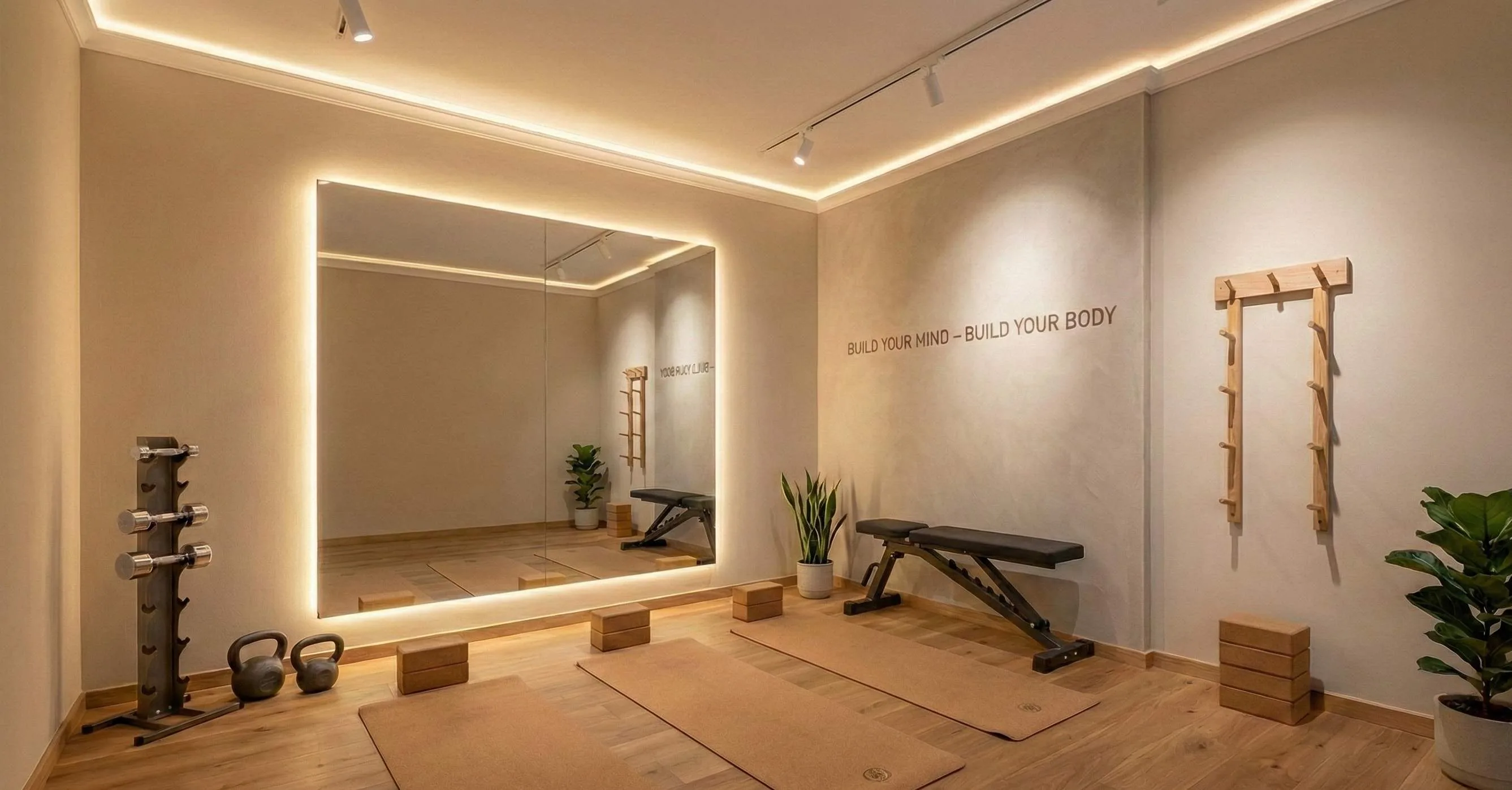
Yoga Mode
ANALYZE YOGA MODE

State A: Yoga Mode

Floor-oriented, calm, minimal. Equipment disappears.

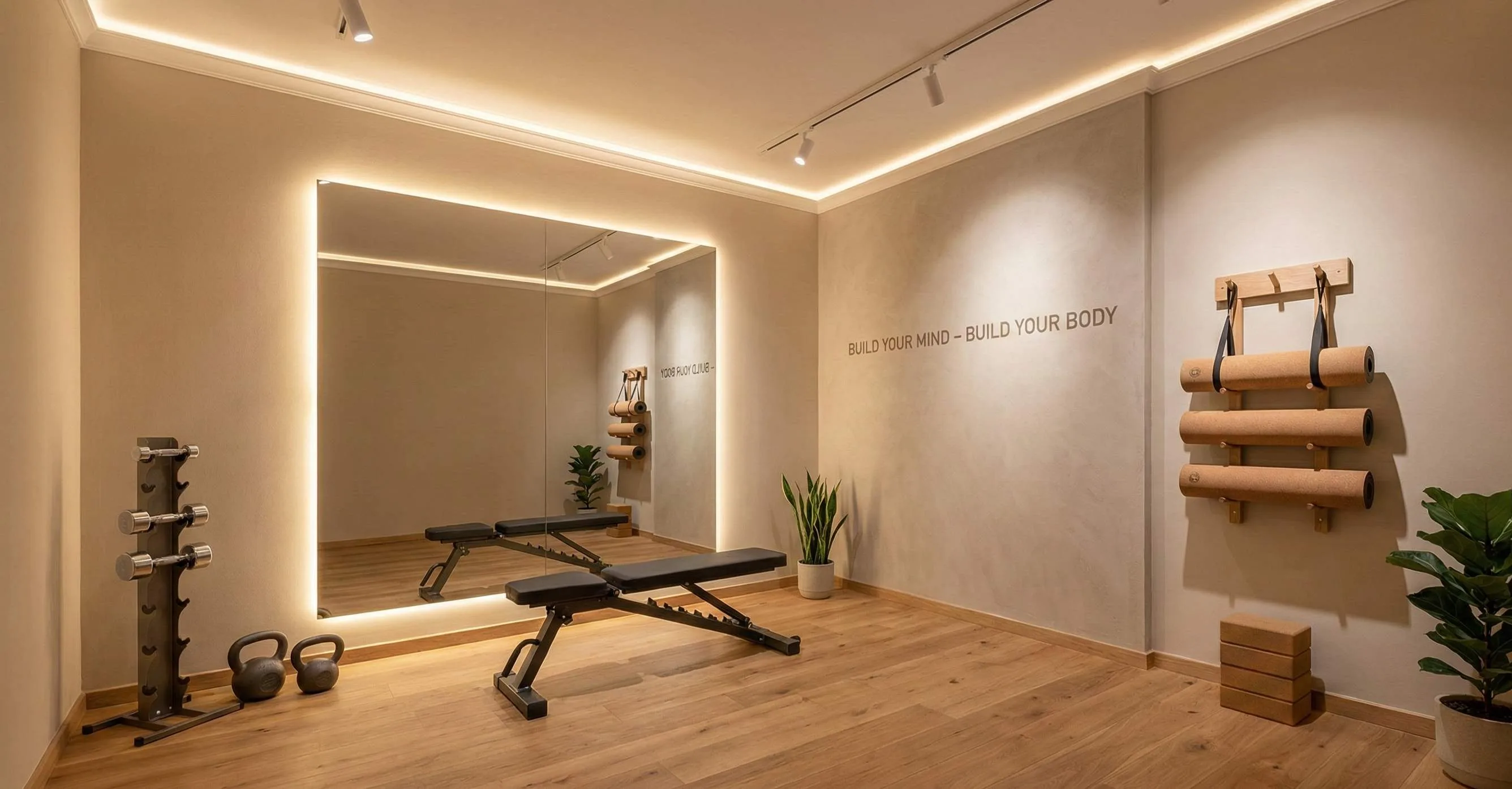
Gym Mode
ANALYZE GYM MODE

State B: Gym Mode

Vertical, active, focused. Weights emerge.

The Beige Silence

"Warm beige tones wrap the space like soft linen—neutral, grounding, and silent."

The Kinetic Flow

"The space is designed to adapt, not compromise. Equipment is integrated, not just placed."

03

Apply a Design System

Architecture stays fixed. Objects change position, visibility and priority.

FIXED ELEMENTS
  • Mirror wall (Reflects light)
  • Indirect lighting (Mood control)
  • Integrated storage (Hides clutter)
FLEXIBLE ELEMENTS
  • Yoga mats (Click to view)
  • Dumbbells (Click to view)
  • Adjustable Bench (Click to view)
04

Curate the Atmosphere

Light, material and silence shape how the body uses the space.

“Build your mind.
Build your body.”
×

Chosen for spatial efficiency, not branding.

VIEW ON AMAZONAffiliate link. Supports independent architectural research.