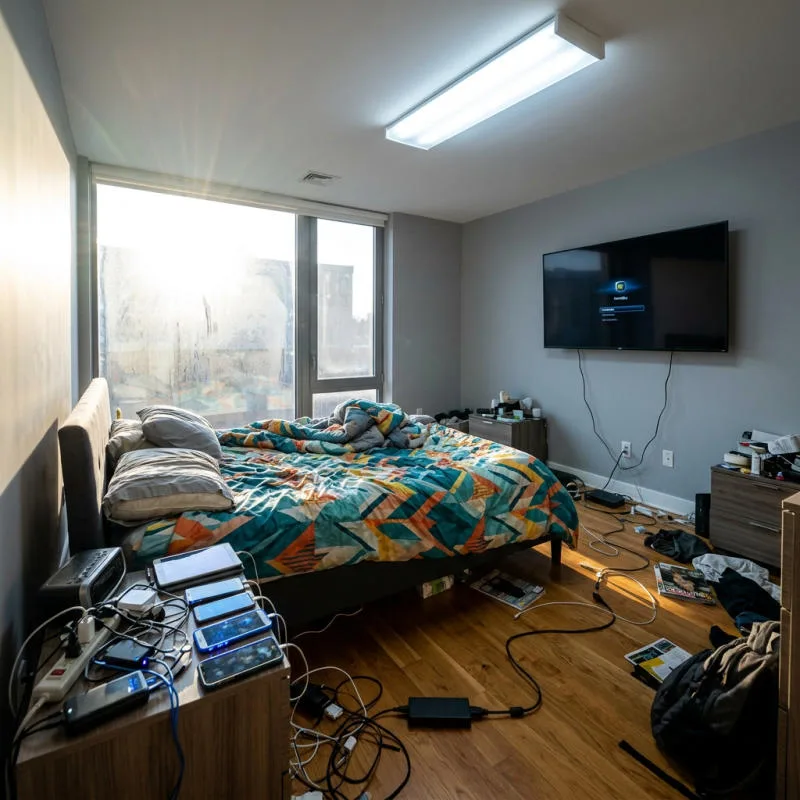
Your bedroom isn't restful. Your layout is keeping you alert.
Blue light leaks, synthetic materials, and screen-facing layouts keep your mind in active mode hours after you've stopped working. A layout built for physiological recovery — not just decoration.
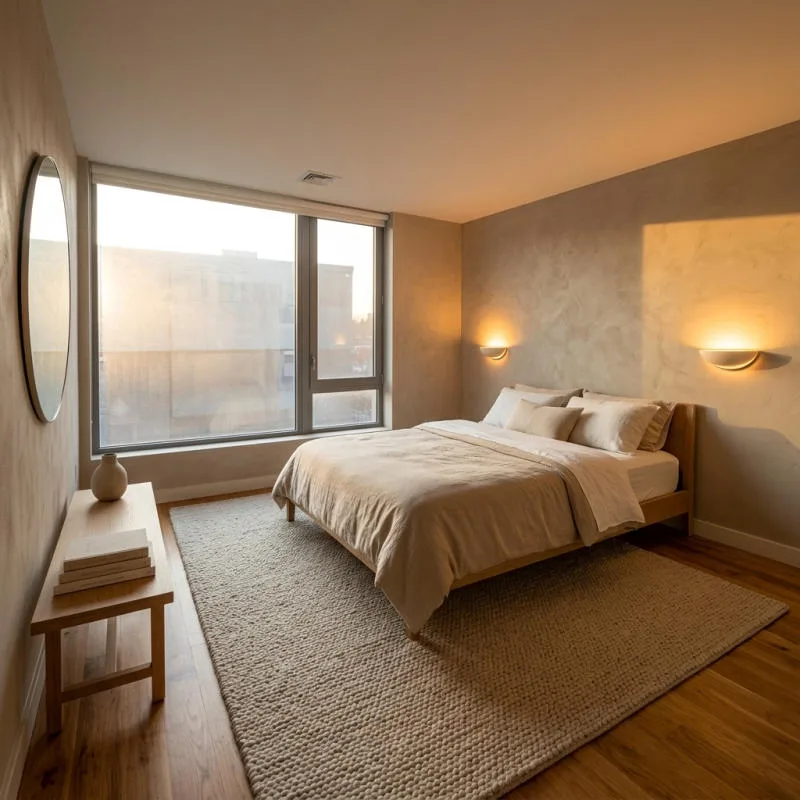
Position the bed as the primary sage on the room's central axis. A low-profile frame minimizes visual mass and increases perceived room volume. The bed must not face the door directly — your nervous system needs a protected position to fully release. This is not Feng Shui mysticism. This is evolutionary biology applied to floor plans.
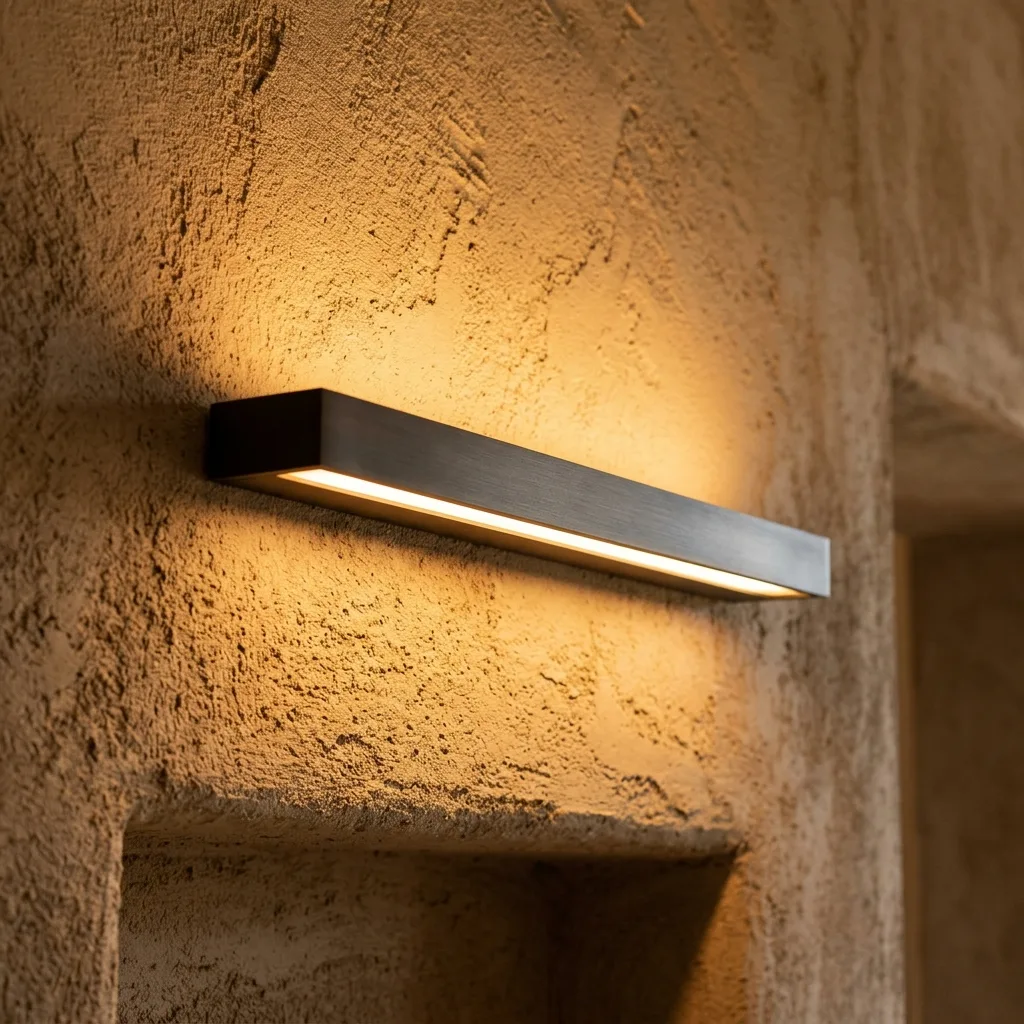
No light source above 2200K in the bedroom after sunset. This is the single most important technical rule in the system. Blue spectrum light suppresses melatonin for up to 90 minutes after exposure. Replace every bulb with warm amber. Add indirect paths — light should bounce off walls, never shine directly into your eyes from the pillow.
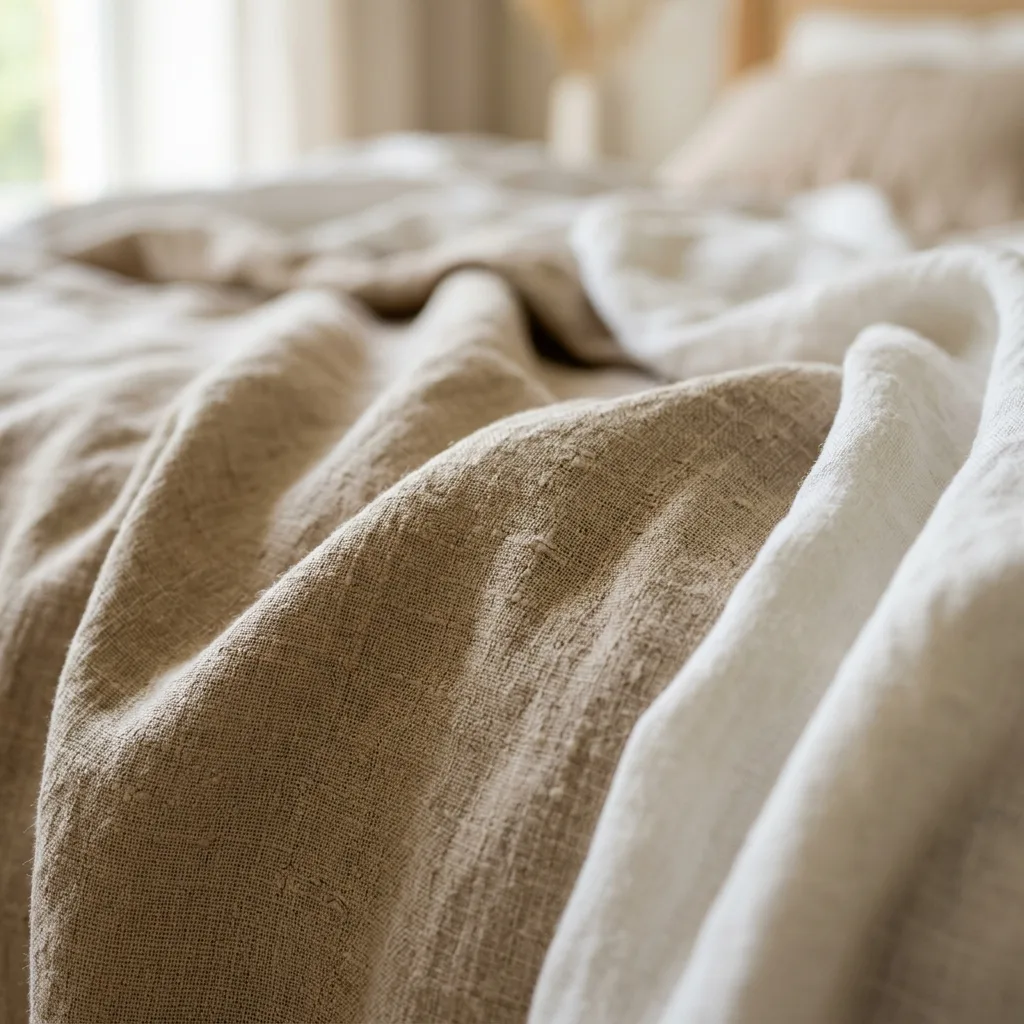
Synthetic materials create micro-static electricity and trap heat — both keep your nervous system in low-level alert. Replace with heavyweight linen, raw cotton, and wool. These materials breathe, regulate temperature, and introduce gentle compression that physically signals your body: "It's safe to let go now." Texture matters more than thread count.
Tap the hotspots to see why each element supports sleep — and what had to be removed.
The 3-rule formula to mechanically optimize your bedroom for sleep.
Ready to implement. Architect-reviewed for your specific bedroom.